There has been a lot of discussion about how AI search fits into the digital landscape. Is it just SEO rebranded? In this article, we explain the differences and help you understand what the new AI landscape means for your business.
What are AEO and GEO?
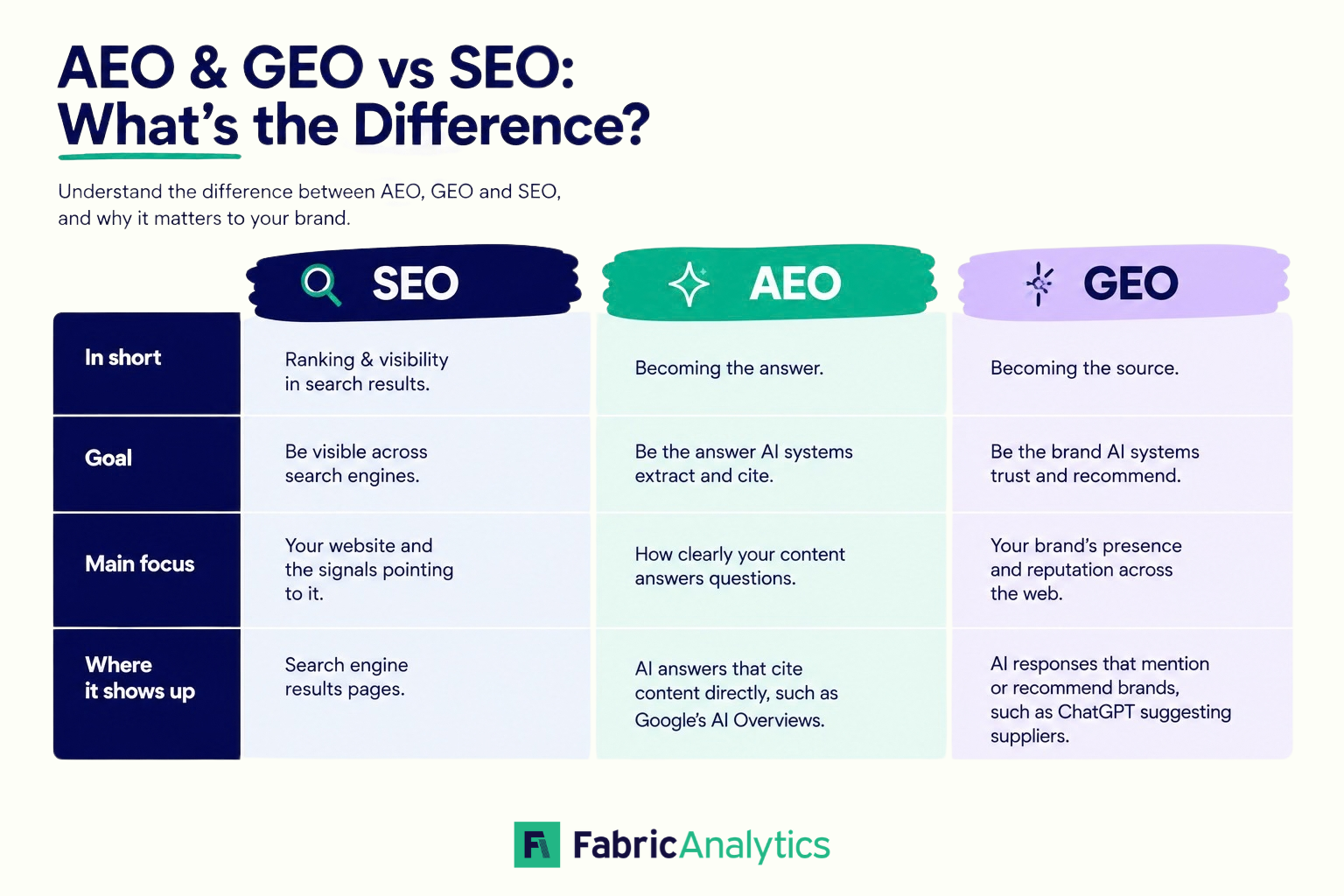
Answer Engine Optimisation (AEO) is optimising your content so AI systems can easily extract it, understand it and cite it as the answer to a query. In short, AEO is about "becoming the answer".
Generative Engine Optimisation (GEO) is optimising your brand's presence, authority and trustworthiness across the wider web, so AI systems are more likely to reference or recommend you when they generate a response. In short, GEO is about "becoming the source".
Both are part of the evolution of brand discovery and organic digital presence. Because they're relatively new terms, there's no universally standardised definition yet, so these are our working definitions.
Both apply across the various AI platforms, whether that's Google's AI Overviews and AI Mode or tools such as ChatGPT and Claude.
Are AEO and GEO the same as SEO?
There's a lot of debate here. One side argues that AEO and GEO are simply SEO with a new label; the other argues they're an entirely new discipline. Both are partly correct.
This is mainly because AI search is built on an SEO foundation, and many of the underlying actions overlap. However, treating them as the same misses the wider change. AI systems draw from a much broader digital ecosystem, and users are no longer just turning to Google for answers. Each platform has its own algorithms and approach.
In effect, AEO and GEO are evolutions rooted in SEO, but they change how the industry needs to approach organic visibility. SEO had already been moving away from individual keyword rankings, and AI in search has sped that up. SEO's role within the wider digital ecosystem is also shifting. But strong SEO is still the foundation; AI search builds on it rather than replacing it.
The digital landscape has long been best treated holistically, by understanding the part each channel plays in overall performance. In our view, many channel strategies still operate in isolation from one another, and AI search has put a spotlight on this. AI search, organic search and digital marketing as a whole now need to be reviewed across the customer's entire multi-channel journey, with a focus on semantic and topical authority.
YouTube is a good example. Across a wide range of tracked queries, we've consistently seen it among the top-cited sources, though this varies significantly by industry. Ahrefs' analysis of more than 3 million US queriesranked YouTube as the most-cited domain in Google AI Overviews (September 2026). As a Google-owned platform, its prominence in Google's AI features is perhaps unsurprising. But it's a reminder that AI visibility depends on the entire information ecosystem around a brand, some of which sits outside its own website.
Traditional off-site SEO has largely centred on signals pointing back to a brand's site, such as links. AI systems go further, drawing directly on reviews, forums, videos and third-party content, whether or not they link to the brand.
So, AI search isn't simply "SEO rebranded". It's an evolution that widens the frame beyond the website, and beyond traditional off-site SEO, creating new and exciting opportunities to grow a brand's digital presence.
Why does this matter?
User behaviour has been changing for some time, and AI search has amplified that change. It has opened new ways for users to discover solutions, businesses and products. Rather than searching, clicking and comparing across multiple sites, users can now often get the answer without visiting a site at all.
AI recommendations can carry real weight. In a 2026 UK survey by CloudNine PR , 48% of AI users said they'd consider buying from a brand that an AI recommended, even if they'd never heard of it. Also, 79% said they'd check other sources, which is exactly why a brand's wider digital footprint matters, not just its own website.
AI search has introduced new risks as well. AI responses may describe your brand negatively or inaccurately, or recommend competitors instead of you, so brands need to keep monitoring and adapting as these platforms evolve.
There is also a change in how success needs to be measured. A brand can be recommended in an AI response without the user ever visiting its site, so rankings, clicks and traffic no longer tell the full story. Understanding how often a brand is cited, how it's described and when competitors are recommended instead is now just as important.
Put simply, AI visibility has become an increasingly important part of the customer journey, from first discovery through building trust in the brand to eventual conversion.
If you want to know exactly where and how your brand appears in AI search, and where the biggest opportunities are, get in touch with our team.
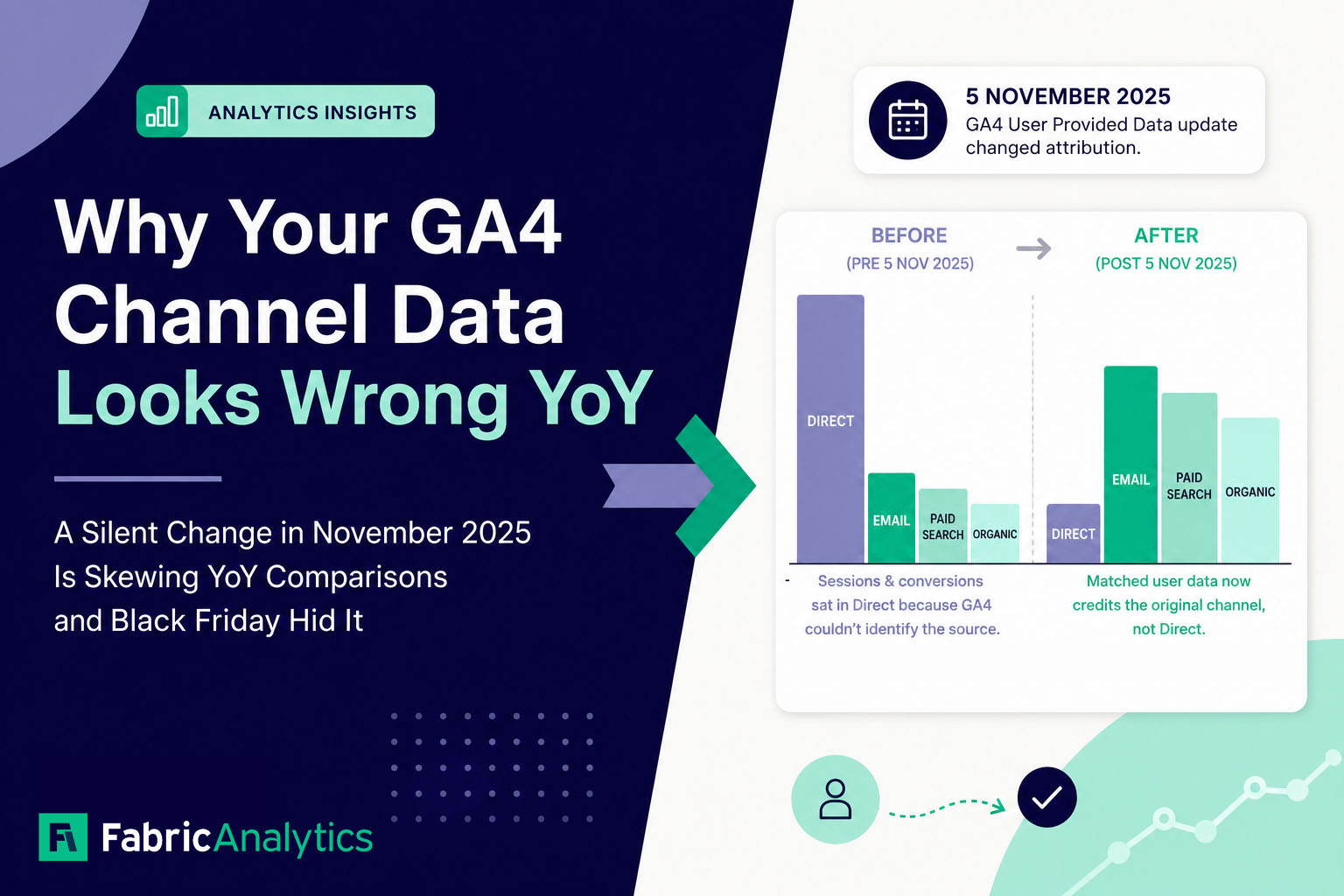
A little-publicised GA4 update in November 2025 changed how traffic is attributed, making YoY channel comparisons misleading for many businesses. Here's what changed, how to spot it, and what it means for your reporting.
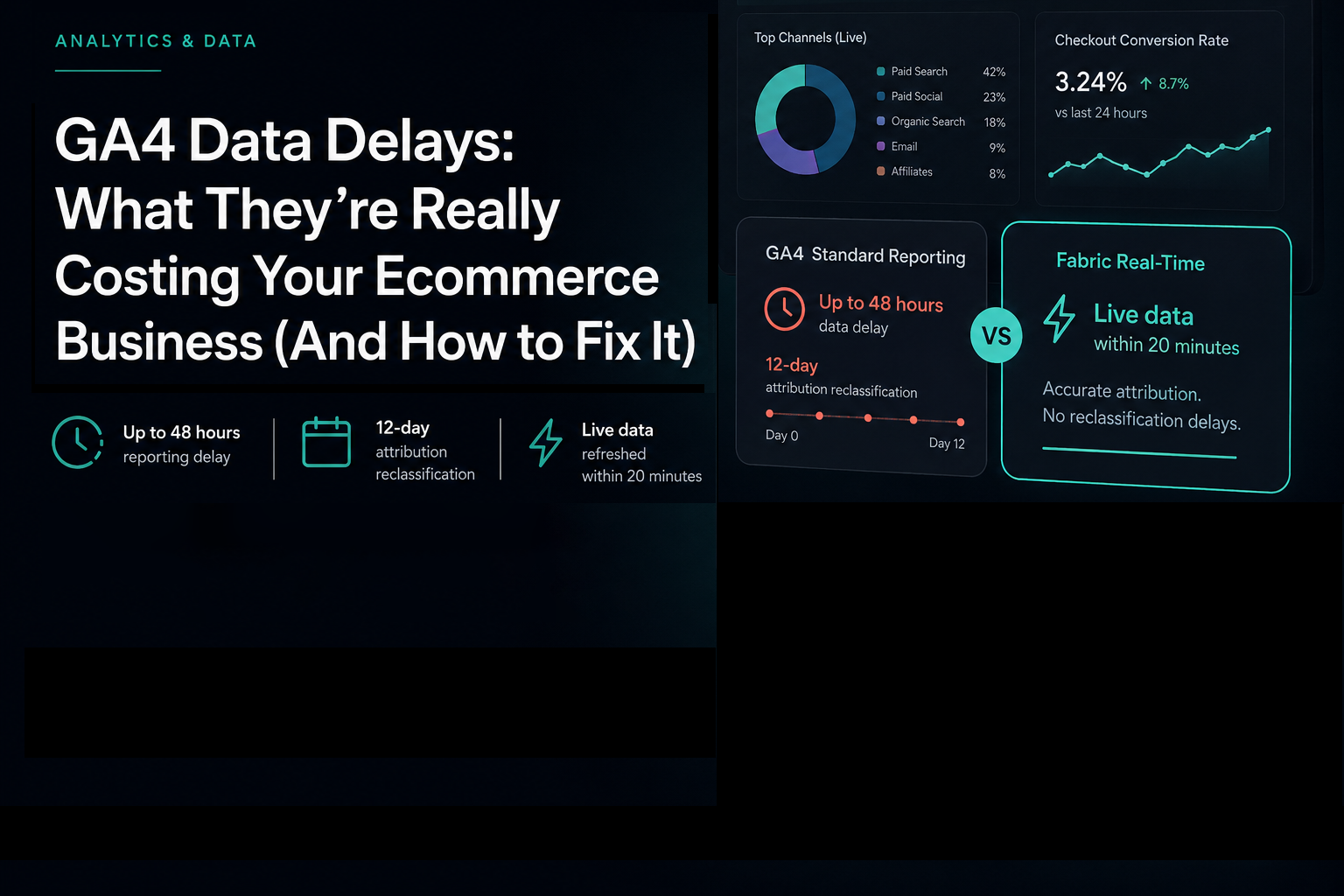
In this post we'll break down exactly what the GA4 data delays are, what they cost in practice, and how leading UK ecommerce brands are solving the problem.