

AEO & GEO vs SEO: What's the Difference?
Understand the difference between AEO, GEO and SEO, and why it matters to your brand.
October 14, 2026
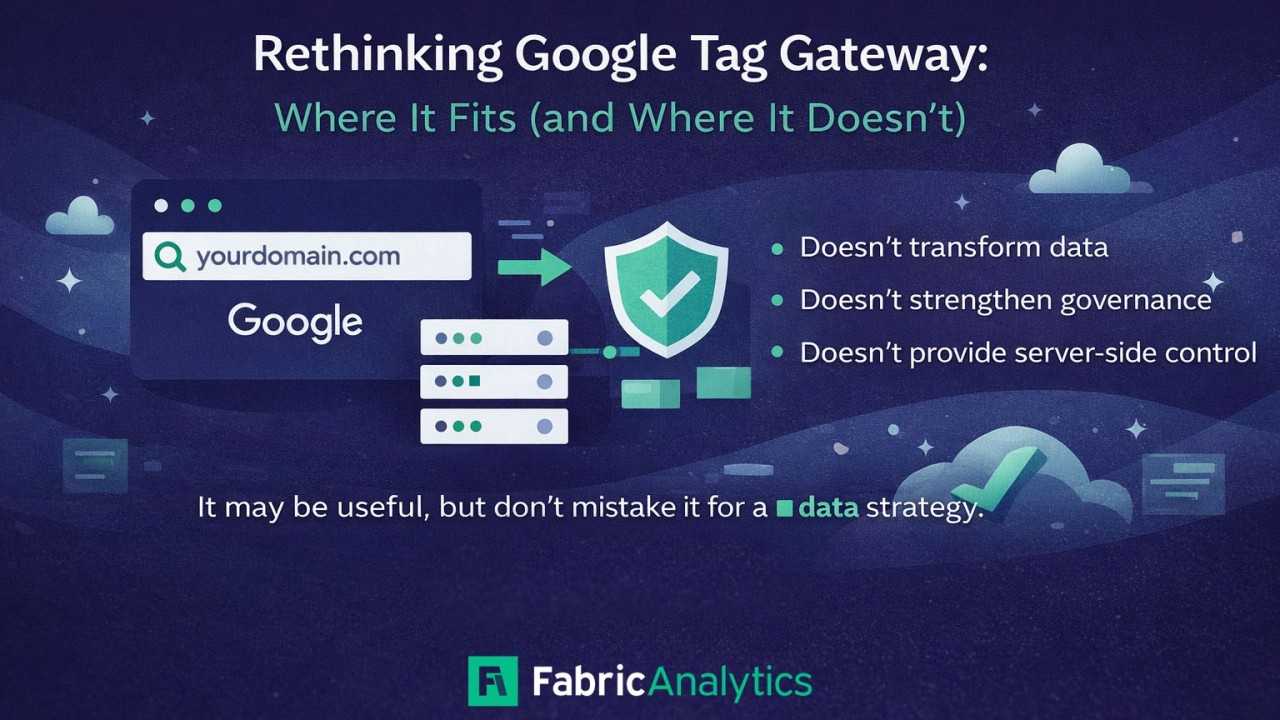
Before critiquing it, it’s important to be clear about what Google Tag Gateway actually is.
Google Tag Gateway allows websites to continue running Google tags (such as GA4 or Google Ads), but instead of sending measurement requests directly to Google domains (e.g. google-analytics.com), those requests are routed through a first-party endpoint on your own domain.
Without Tag Gateway Browser → google-analytics.com
With Tag Gateway Browser → yourdomain.com → Google
The rationale is straightforward: by proxying requests through your own domain, they appear more “first-party.” This can reduce blocking from some basic extensions and aligns with the broader shift toward first-party data collection.
It’s often positioned as a lighter-weight alternative to full server-side tagging — something that improves reliability without significant infrastructure investment.
That’s the promise.
Most measurement challenges aren’t caused by blocked network requests.
They’re caused by fundamentals:
Google Tag Gateway doesn’t address any of these.
It doesn’t:
It changes where the request is routed — not the quality of the data being sent.
It improves transport, not truth.
Because requests pass through your domain, it’s easy to assume this is effectively “server-side tracking.”
But the real value of server-side architecture isn’t the routing — it’s the control layer.
A properly implemented server-side setup allows you to:
Tag Gateway proxies requests. It doesn’t meaningfully transform or govern them.
So while it adds infrastructure, it doesn’t unlock the strategic advantages of infrastructure.
Routing through a first-party domain can reduce blocking from some browser extensions.
However, most modern data loss stems from:
Tag Gateway does not override browser privacy models, extend cookie lifetimes, or replace consent management logic.
It may help at the margins — but it is not a structural solution.
If you have engineering capacity and stakeholder alignment, effort often yields stronger returns when directed toward:
These investments improve data integrity, trust, and long-term resilience.
Tag Gateway adjusts the plumbing. Governance and architecture improve the outcome.
Google Tag Gateway isn’t without merit.
In certain setups, it can:
But it’s not:
If your tracking foundation is weak, it won’t fix it. If your tracking foundation is strong, you’ll often see greater returns from investing in governance or properly implemented server-side infrastructure.
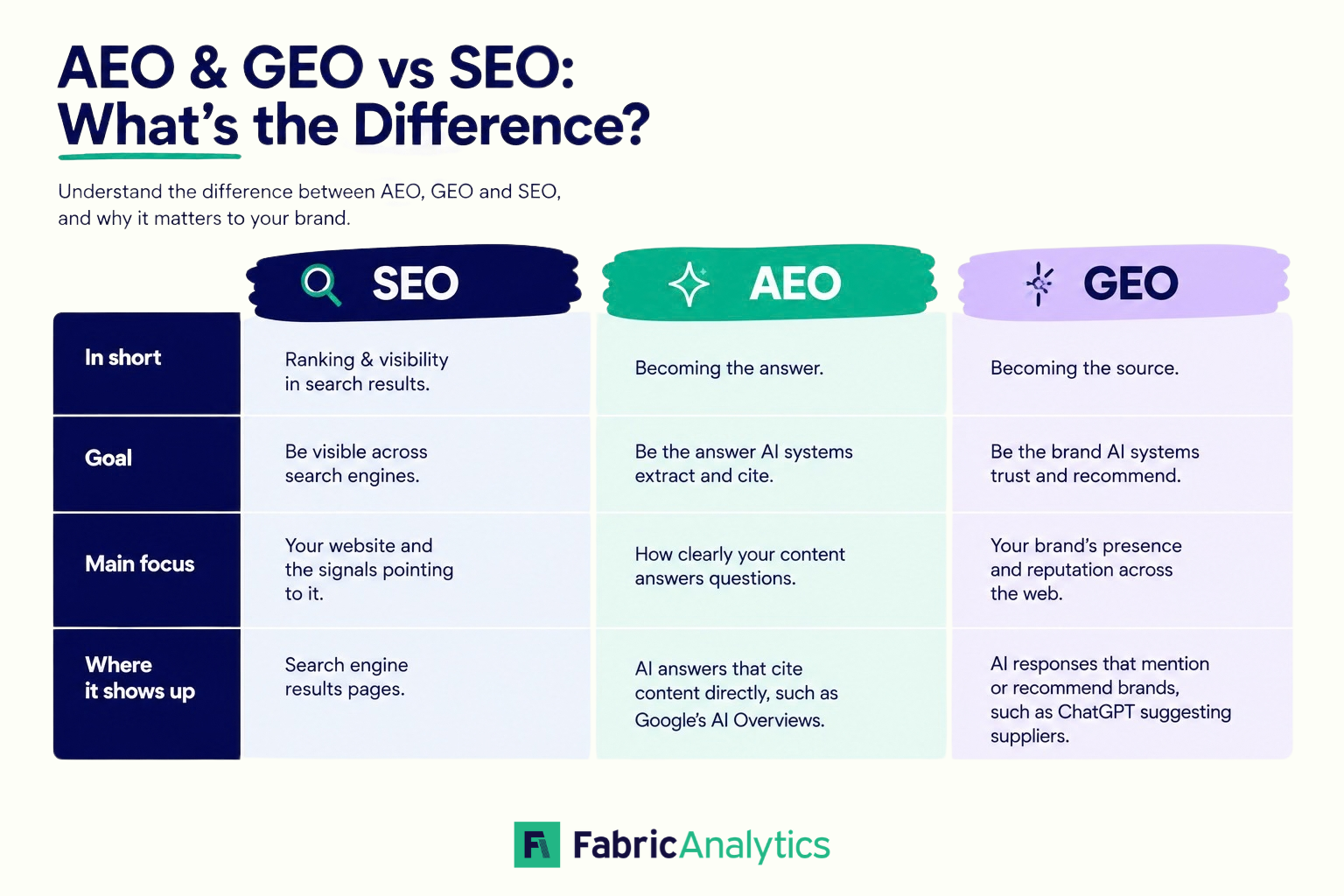
Understand the difference between AEO, GEO and SEO, and why it matters to your brand.
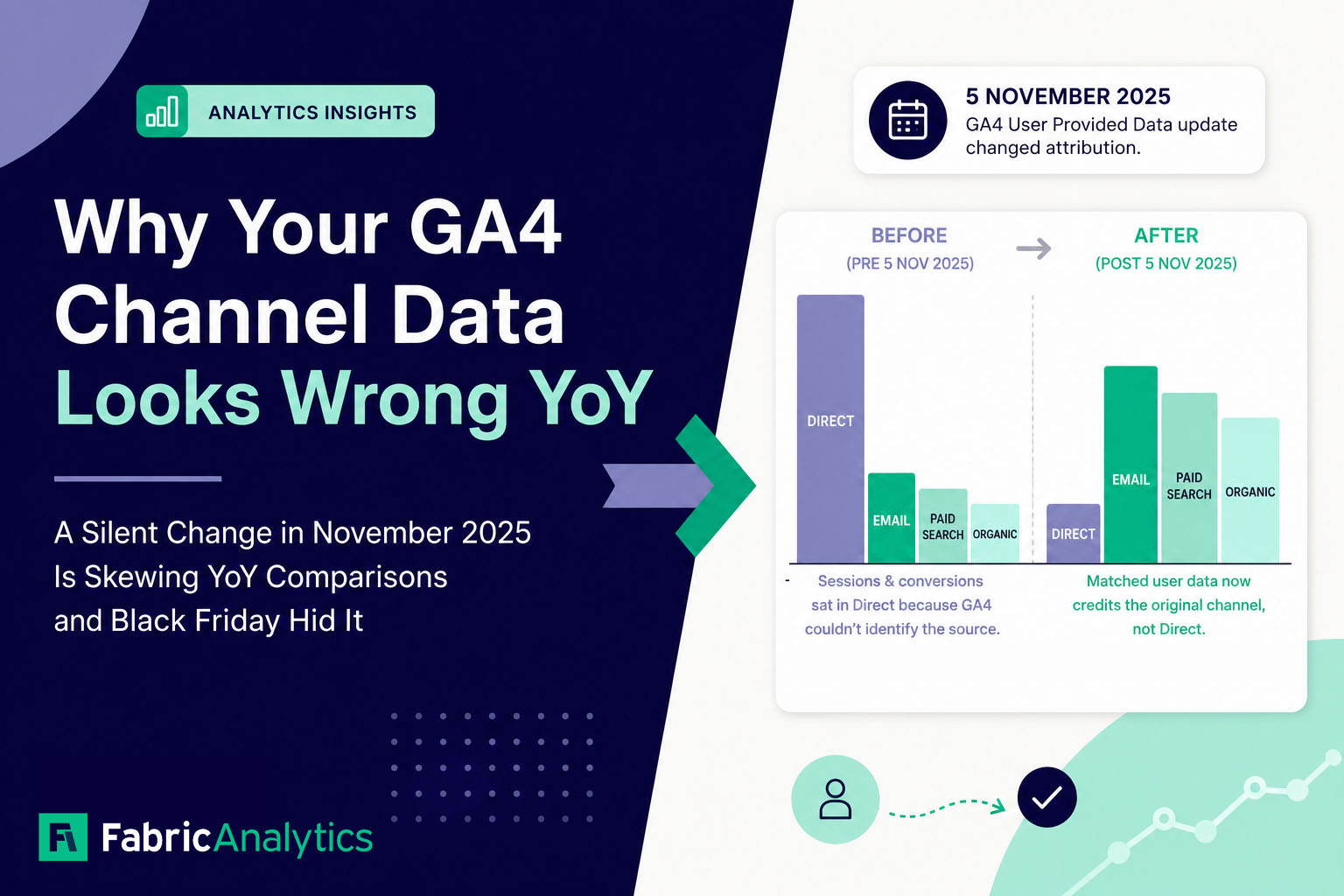
A little-publicised GA4 update in November 2025 changed how traffic is attributed, making YoY channel comparisons misleading for many businesses. Here's what changed, how to spot it, and what it means for your reporting.
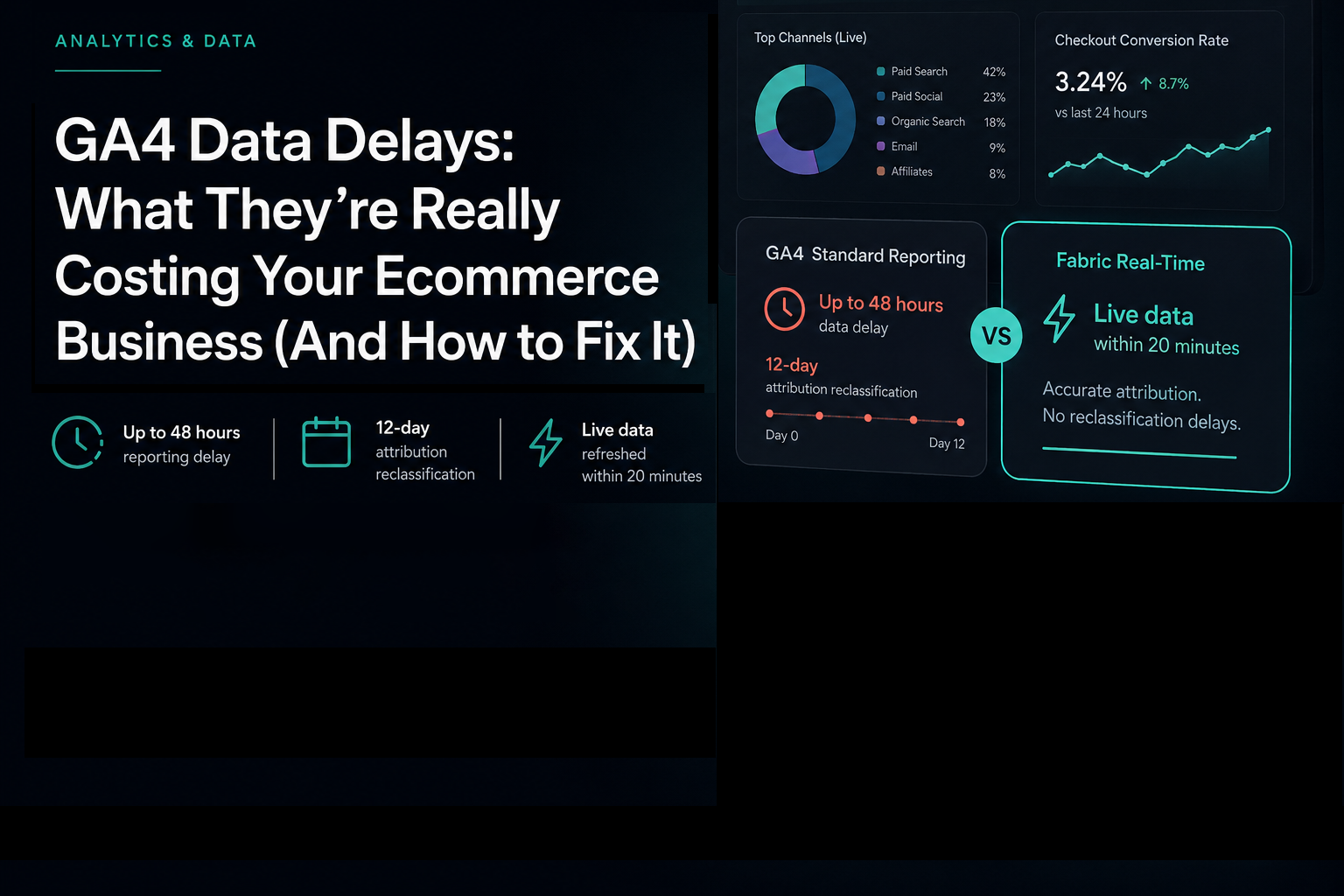
In this post we'll break down exactly what the GA4 data delays are, what they cost in practice, and how leading UK ecommerce brands are solving the problem.